
Step 1: Start With What You’re Struggling With
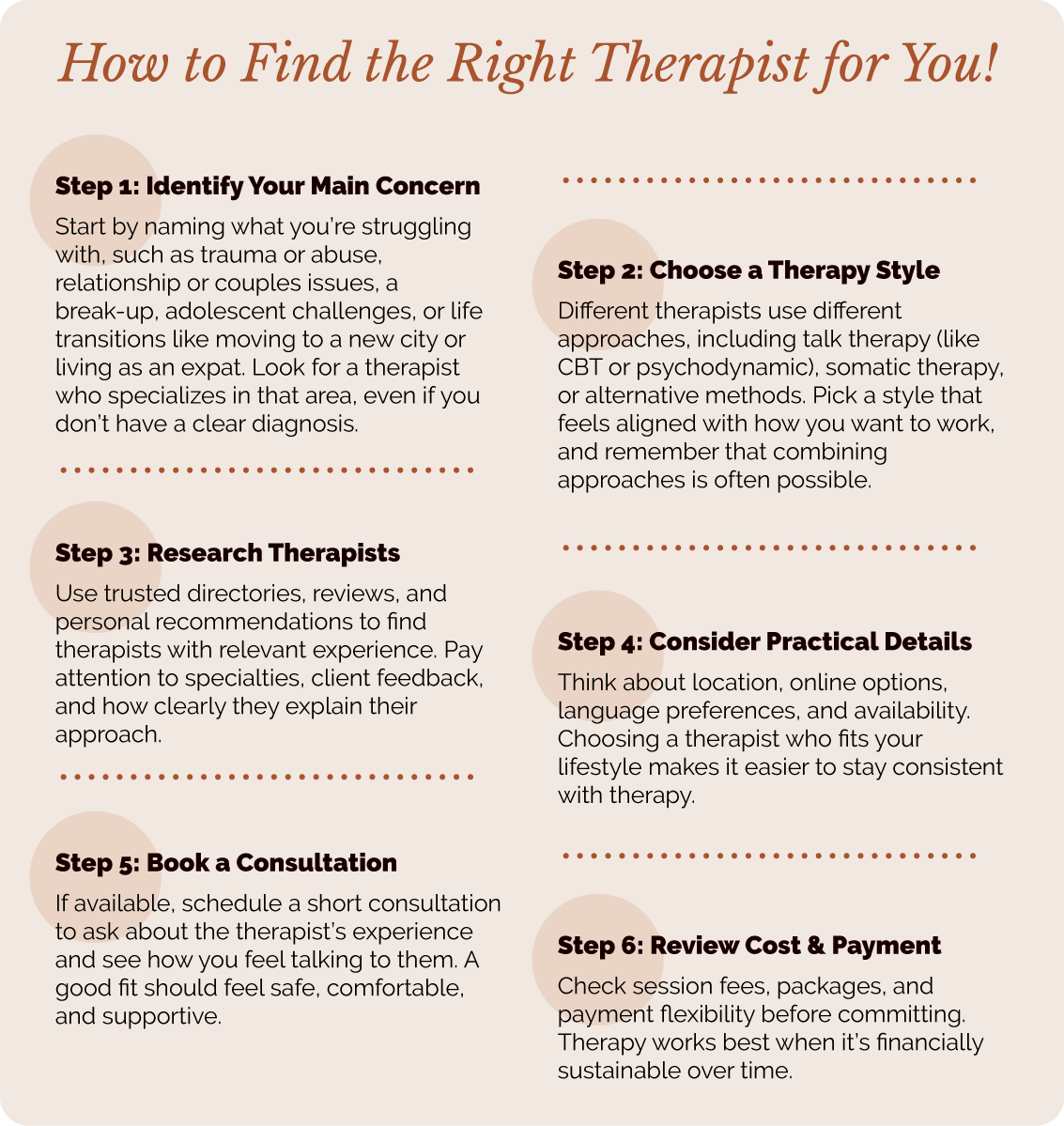
Before searching for a therapist, it helps to identify what you want support for. Therapists often specialize in specific areas, and working with someone trained in your particular concern can make a big difference.
For example, some therapists focus on trauma therapy, helping people process experiences such as abuse, violence, or long-term emotional harm. Others specialize in couples therapy, supporting partners with communication issues, conflict, or separation. There are also therapists who work primarily with adolescents, addressing challenges like identity, school stress, anxiety, or family dynamics.
In addition, some therapists specialize in life transitions, such as expats who have recently moved to a new city or country, people adjusting to cultural change, or individuals coping with loneliness and identity shifts. Others focus on helping clients through break-ups, divorce, or emotionally abusive relationships, offering support during periods of grief, confusion, or rebuilding self-esteem.
You don’t need a perfect diagnosis to begin, just a general sense of what you’re dealing with. When browsing therapist profiles, look for keywords that reflect your situation and check whether the therapist has experience working with similar concerns. A therapist who regularly works with your type of struggle is more likely to understand its complexities and use approaches that are effective.
Step 2: Figure Out What Kind of Therapy You Need
Mexico City is a place where people from all walks of life come to find therapy, whether they’re looking for emotional support or ways to improve their mental health. With so many options, you can easily find a therapy style that works for you… Or you might wish to combine a few. Here are a few of the most common methods:
-
Psychotherapy (Talk Therapy)
Talk therapy is probably the most well-known kind of therapy, and it is the one you should try first. It’s all about sitting down with a therapist and talking through your thoughts and feelings. Therapists here use different approaches, but some of the most popular are Cognitive Behavioral Therapy (CBT) and psychodynamic therapy. CBT focuses on changing negative thinking patterns, while psychodynamic therapy looks at past experiences to understand why we act the way we do today. If you’re feeling overwhelmed, anxious, or just need someone to listen, talk therapy is often a great place to start. -
Somatic Therapy
Somatic therapy is all about connecting your mind and body. In this type of therapy, you learn to notice how your emotions show up physically… maybe you feel tension in your shoulders or a tightness in your chest when you’re stressed. Somatic therapists use techniques like deep breathing and body movement to help you release that tension and heal. It’s a great option for people who want to work through trauma or stress that feels “stuck” in their body, and it’s gaining more popularity in Mexico and Mexico City. -
Alternative Therapies
Alternative therapies have been growing in popularity, and many people in Mexico turn to these holistic methods for mental and emotional healing. This can include practices like acupuncture, Reiki, and meditation, which focus on balancing your energy. One interesting alternative therapy is cacao… yes, the kind you drink! Cacao ceremonies are a traditional way to connect with your emotions, open your heart, and release what no longer serves you. It’s often combined with guided meditation or intention-setting, making it a really unique and meaningful experience for those who are open to it.
Step 3: Research Therapists Using Updated Directories & Reviews
Now that you have an idea of what kind of therapy you need, it’s time to start looking for a therapist. Here are some of the tools to help you find a professional in Mexico City:
Doctoralia
Doctoralia is a platform for finding doctors and therapists in Mexico. You can look for someone who specializes in areas like trauma or anxiety. The website lets you search by location and language. People who have seen therapists before leave reviews on Doctoralia. These reviews can give you an idea of what the therapist is like and if they are good at their job. You can find a therapist on Doctoralia Mexico.
Psychology Today
Psychology Today is a great resource for finding therapists. While it’s known for its listings in the U.S., it also includes some therapists in Mexico City. You can search by therapy type, specialty, and languages spoken. Psychology Today also provides detailed information about each therapist, such as their qualifications and how they work with people. It’s a great way to find highly-rated professionals in Mexico City.
Google Maps
Don’t underestimate the power of Google Maps. If you search for “therapists near me” or “psicólogos en Ciudad de México,” Google Maps will give you a list of therapists nearby. The best part about Google Maps is that you can read reviews from people who have already seen these therapists. Google Reviews are often honest and can help you understand what each therapist is like. Google Reviews can be very useful in helping you decide which therapist to choose.
Personal Recommendations
When you are looking for a therapist, it is really helpful to get recommendations from people you know. Ask your friends, family, or coworkers in Mexico City about the therapists they’ve seen. They can tell you what they liked about their therapist. You can also check out groups for people who have moved to a new country or Facebook pages/WhatsApp groups where people talk about these things. These are places where you can find out about therapists that others have liked and trusted.
When reading reviews, pay attention to what people are saying about the therapist’s communication style. You want to know how the therapist makes other people feel. You also want to know if the therapist’s approach actually worked for people. If something about the therapist doesn’t feel right to you, then it’s okay to keep looking for one that’s a better fit. Trust your instincts when it comes to choosing a therapist.
Step 4: Consider Location, Language, and Availability
Mexico City is huge, so location is important. If you don’t want to deal with traffic, try to find a therapist who has an office near where you live. You can also look for therapists in Mexico City who offer online sessions, which many therapists, including myself, do.
I have my office in Condesa and Roma, neighborhoods that are central and easy to access. I also offer virtual therapy sessions, so therapy is easier for people to access, no matter where they live. Whether you’re in Mexico City or elsewhere, you can still get the support you need.
If you need therapy in English, check if the therapist can accommodate that. I speak both Spanish and English, and I work with clients who speak either language, so you can feel comfortable no matter which language you prefer.
Step 5: Take Advantage of Free Consultations
I recommend talking to a therapist before committing. Some therapists, like me, offer a free 15-minute consultation. This gives you a chance to see if you like the therapist. You can ask them about their approach, experience, and how they work with people facing needs similar to yours. This will help you figure out if the therapist is a good fit for you.
When you first meet with a therapist, ask them about how they work. You want to know how they will help you and how they track your progress. It’s also a good idea to ask if they’ve helped people with problems like yours, such as trauma, anxiety, or depression. If you don’t feel comfortable with the therapist, it’s okay to look for someone else. Therapy should feel safe, and you need to feel comfortable with the person you’re working with.
Step 6: Consider the Cost and Payment Options
Therapy costs can vary, so it’s important to find a therapist you can afford. Some therapists in Mexico City will work with you to find a price that fits your budget. They may offer discounts or packages if you plan on attending regularly. When you talk to a therapist, don’t be afraid to ask how much they charge. Knowing the cost ahead of time will help you plan and ensure that you can continue therapy without worrying about the money.
A Little About Me
I’m a therapist based in Condesa and Roma, offering therapy in both English and Spanish. I specialize in helping people with trauma, anxiety, depression, and emotional blockages.
If you’re interested in trying therapy with me, I offer a free 15-minute consultation to discuss your needs and see if we’re a good match. Don’t hesitate to get in touch with me. I’d love to help you explore whether therapy with me is right for you. Book a free consultation with me.
Conclusion
Finding the right therapist can be tough, but if you take your time and use the right tools, you’ll find someone who can help you with your mental health. Start by looking at lists of therapists on Doctoralia, Psychology Today, and Google Maps. Read what others are saying about them, and ask for recommendations from people you trust. If you’re not sure about a therapist, take advantage of free consultations to see if they’re a good fit for you.
Remember, therapy is a personal journey, and finding the right fit is key. I’m here to support you, if you’d like to chat or get more information, don’t hesitate to reach out.